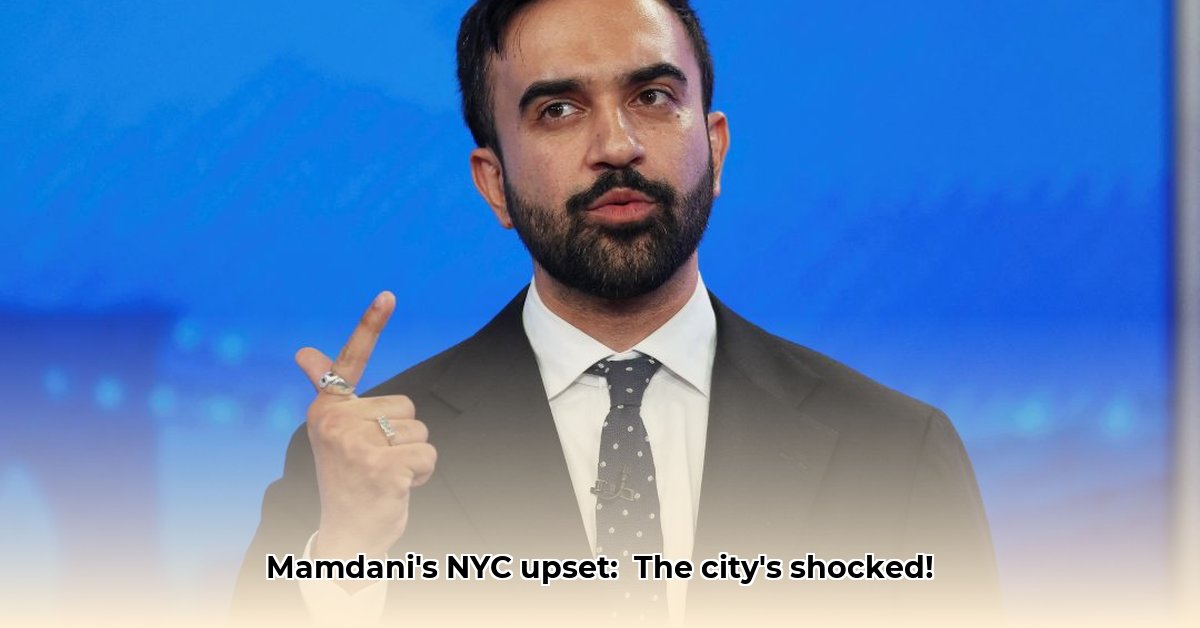
Mamdani New York: A Shocking Win, and What Comes Next
The New York City mayoral race took a dramatic turn with Zohran Mamdani's surprise victory in the Democratic primary. This win wasn't just a close call; it was a seismic shift, revealing deep divisions within the Democratic party and showcasing the growing influence of progressive politics in the Big Apple. His campaign, built on a platform of affordability, social justice, and expanded social programs, resonated strongly with a significant portion of New Yorkers. But this victory also triggered a strong backlash from more moderate Democrats, setting the stage for a fiercely contested general election. How did a relatively unknown candidate achieve such a remarkable feat, and what does this mean for the future of New York City?
How did Mamdani manage to pull off this upset win? Was it his surprisingly effective grassroots campaign, or something else entirely?
A Platform That Hit Home
Mamdani's platform wasn't abstract; it directly addressed issues impacting everyday New Yorkers. Proposals like free bus rides, publicly funded childcare, and rent control resonated deeply with lower- and middle-income families. His ambitious aim – a $30 minimum wage by 2030 – was bold and captured public attention. This commitment to economic equality became a central pillar of his campaign, attracting significant support while simultaneously alarming others.
The Establishment Fights Back
The response from moderate Democrats and powerful business leaders was swift and forceful. They view Mamdani as a threat to the established order, and their opposition is readily apparent. Concerns range from his economic policies to his stance on Israel. This isn't just a political disagreement; it's a battle for power and influence, with heavy hitters like Whitney Tilson and Bill Ackman openly backing the opposition. This conflict highlights deep partisan divides within the city and even the state.
Money Talks: A David vs. Goliath Story?
While Mamdani enjoys considerable grassroots support, financial resources play a crucial role in politics. He faces a formidable challenge in securing the funding needed to compete effectively against his well-funded opponents. The sheer financial disparity is striking. Can his campaign overcome this significant funding gap in the upcoming general election? The situation resembles a classic David-and-Goliath showdown, with the outcome far from certain.
The General Election: Uncertainty Reigns
The general election is far from a straightforward two-horse race. The presence of independent candidates introduces significant uncertainty. Could these candidates act as spoilers, shifting votes away from Mamdani or his opponents? This possibility, coupled with Mayor Eric Adams' independent run (potentially attracting moderate voters uncomfortable with Mamdani's progressive policies), adds a layer of unpredictability. The final result remains far from clear.
What Lies Ahead: A Glimpse into the Future
The following table offers a concise overview of key players and their likely strategies:
| Stakeholders | Short-Term (0-1 year) | Long-Term (3-5 years) |
|---|---|---|
| Zohran Mamdani Campaign | Secure more funding; build broader coalitions; directly address concerns of moderate voters. | Implement campaign promises; navigate potential opposition from the city council; secure long-term funding and support. |
| Moderate Democrats | Develop a general election strategy; possibly support an independent candidate; propose alternative policies. | Maintain influence within the city council; strengthen business community relationships. |
| Business Leaders | Engage with Mamdani's team; promote alternative economic policies; actively support opposing candidates. | Push for pro-business policies; build city government relationships; influence city planning and zoning. |
| New York City Voters | Active civic participation; thorough investigation of campaign promises; active general election participation. | Close monitoring of policy implementation; holding elected officials accountable. |
How to Effectively Counter Zohran Mamdani's NYC Mayoral Campaign
Zohran Mamdani's primary win revealed vulnerabilities in traditional campaigning. His success stemmed from a strong social media presence, targeted outreach, and a robust ground game. This article explores how to effectively counter his campaign in the future.
Deconstructing the Mamdani Strategy: A Case Study in Modern Politics
Mamdani’s campaign was not reliant on big-money donations or endorsements. His success rested on three pillars:
Digital Domination: Masterful use of social media allowed him to connect authentically with voters. It was about consistent engagement, not just slick ads.
Grassroots Ground Game: Old-fashioned hard work – door-knocking, volunteer mobilization, and community outreach – proved crucial.
Targeted Outreach: Mamdani tailored his message to resonate with specific demographics, showcasing an understanding of the city's diversity.
Identifying Weak Points: Opportunities for Counter-Strategies
Despite his success, Mamdani's strategy had weaknesses:
Limited Name Recognition: While his campaign gained momentum, some voters may still be unfamiliar with him.
Policy Depth: Some critics argue his policies lacked sufficient detail.
Vulnerability to Negative Campaigning: His focus on affordability could be presented as simplistic or unrealistic.
Developing a Counter-Strategy: Actionable Steps
An effective counter-strategy requires a multi-pronged approach:
Enhance Digital Engagement: Exceed Mamdani's online presence using data analytics for targeted messaging.
Invest in a Robust Ground Game: Match or exceed his community engagement efforts.
Develop Compelling Messaging: Create targeted messages resonating with each community's values.
Highlight Policy Differences: Present detailed policy alternatives, highlighting their strengths.
Leverage Traditional Media: Don't underestimate the influence of newspapers, television, and radio.
The Ranked-Choice Voting Factor
Ranked-choice voting added a layer of complexity. Future strategies must account for its nuances.
Conclusion: Adapting to a Shifting Political Landscape
Mamdani's victory reshaped NYC politics. Future campaigns must be sophisticated, agile, and community-focused. Adaptability will be key to success.